Winter Journey [4]

“What has happened cannot unhappen.” I first came across this mantra-like truth—a fundamental Havel truth—in his account of his last conversation with Jan Patočka. They were unexpectedly able to meet and converse with ease in a prison holding zone when they were both on break from interrogations, May 1977. Here in full is what he wrote: “What has happened, what has once been done cannot be undone, cannot ‘unhappen’, so that somehow, it all is – here – there – somewhere. . . .” This is excellent Havel; what he has in mind can’t be pinned down, it needs approximation, but in his experience it is real. This conviction stayed with him, remained central. A prison letter of August 1980:
When it gets right down to it, I am a child of the age of conceptual, rather than mystical, thought and therefore my god as well—if I am compelled to speak of him (which I do very unwillingly)—must appear as something terribly abstract, vague and unattractive. . . . But it appears so only to someone I try to tell about him—the experience itself is quite vivid, intimate and particular, perhaps . . . more lively than for someone whose “normal” God is provided with all the appropriate attributes. . . . And something else that is typical of my god: he is a master of waiting, and in doing so he frequently unnerves me. It is as though he set up various possibilities around me and then waited silently to see what I would do. . . . His Last Judgment is taking place now, continuously, always. . . : nothing that has happened can ever unhappen, everything remains in the “memory of Being”—and I too remain there—condemned to be with myself till the end of time—just as I am and just as I make myself. (7 August 1980)
We are beginning to collect what I have in mind for today’s theme and this last lap of our winter journey: the memory of Being, its link to human responsibility, and the array of gifts from Being into our lives when we welcome and defend them. There is something more: his vision of confrontation with oneself outside the bounds of time and circumstance—not a great Michelangelo wall painting but a personal reckoning “just as I am and just as I make myself.”
Nearly 20 years after his talk with Prof. Patočka, speaking at Trinity College, Dublin, as president of his country and an altogether free man, Havel returned to this mantra-like certainty and affirmed its link the memory of Being.
Once done nothing can ever be undone, . . . every human life and every deed is recorded forever in the history of Being and has forever changed that history in some way or other. . . . In this way, every human existence can be considered eternal. This is a great source of hope and meaning, but it is also a tremendous commitment and an appeal to responsibility.
In his Harvard University address at around the same period (1995), Havel approached a little differently his conviction that “once done nothing can ever be undone”: “It will certainly not be easy,” he said, “to awaken in people a new sense of responsibility for the world, an ability to conduct themselves as if they were to live on this earth forever, and to be held answerable for its condition one day.” Immortality, anchored to this Earth rather than some more blessed place, would expose us to the consequences of our actions. What a call to responsibility! Nothing, nothing whatever, can be shirked. That is how he saw the matter. “The memory of everything is retained somewhere . . . and therefore nothing is forgiven forever. . .” (Brussels, 2009). Obviously a rigorous vision, suited to our era when global leadership is in part violent and disdainful of consequence. I don’t see why it wouldn’t be accurate, as his overall vision includes the other side of experience, the joy of fulfilling insofar as possible what Buddhism calls with eloquent simplicity “right action”—of cohering with oneself, with community, and with a larger order.
What strikes me as powerful in Havel’s rather flat, mantra-like formulation is the consequence for how we feel about and exercise responsibility. What we did even fifty years ago, or today, is registered in the memory of Being, it is “here – there – somewhere.” We may forget, but there is no forgetting in the larger design of things. However, Havel doesn’t saddle us with responsibility as if he were an upset preacher; his vision is much brighter than that. He reconceives individual responsibility as a central adventure of consciousness, of choosing, knowing, doing. It makes one careful.
In Havel’s understanding, Being is both a diligent record keeper and potentially an agent in our lives. It is a source of ultimate reassurance, hope, and courage, and through conscience (“the voice of Being”) a goad and reminder. Consider one last reimagining of the memory of Being—as a tablet, a biblical artifact.
If not consciously, then at least subconsciously, we always assume— figuratively speaking—the existence of a kind of tablet on which everything is drawn or written down, and we reject the notion that it might merely be drawn or written “on the wind,” and thus that everything is condemned to vanish without a trace. In any case the very categories of change, motion, relativity, impermanence, etc. would not exist, or rather could not be contemplated, if their polar opposites did not exist and were not always contemplated along with them, forming a background against which they become thinkable and possible at all: I mean the notions of permanence, stability, absoluteness. Of course there is more to it than a rule of logic: our responsibility—that is, what makes us human in the first place—is also unthinkable without the assumption of some stable background to which it relates and which defines it. This assumption therefore, has a moral dimension as well . . . . When we begin inquiring seriously after the meaning of life and Being, there usually begins to emerge, sooner or later, from the dimness of our unconsciousness the emotional assumption of this “absolute horizon,” this “tablet” on which everything transitory is inscribed, this point of stability from which the entire order of Being grows and which makes that order an order in the first place. (19 September 1981)
Havel is well aware of the religious dimension of his vision of Being, its impeccable memory, and our potential to listen for its voice, but he doesn’t mind at all if others see it otherwise or not at all, as long as they respond.
Orientation toward Being as a state of mind can . . . be understood as faith: a person oriented toward Being intrinsically believes in life, in the world, in morality, in the meaning of things and in himself. His relationship to life is informed by hope, wonder, humility and a spontaneous respect for its mysteries. He does not judge the meaning of his efforts merely by their manifest successes, but first of all by their “worth in themselves” (i.e., their worth against the background of the absolute horizon). . . . Believers are all those who do not surrender to their existence-in-the-world, regardless of whether or not they acknowledge a God, a religion or an ideology, and even regardless of whether they admit or deny that there is a transcendental dimension to their way of existence-in-the-world. (14 August 1982)
Havel’s vision of Being as the source and sustainer of true human responsibility is central to his quiet understanding of how the world works—and to the recurrent warnings in his public talks. In one of the last talks (2010), at the annual gathering of elders he co-created with Elie Wiesel in Prague, he drew out the global consequences of irresponsibility:
Everything is here all the time, . . . nothing that has happened can unhappen, and . . . with our every word or movement we are making the cosmos different—forever—from what it was before. In all events, I am certain that our civilization is heading for catastrophe unless present-day humankind comes to its senses. And it can only come to its senses if it grapples with its short-sightedness, its stupid conviction of its omniscience and its swollen pride, which have been so deeply anchored in its thinking and actions.
I suppose that it’s strange—in any case, rare among political leaders—that Havel could not conceive of a reasonable solution for our immense difficulties in this era without the breath of spirit somehow reaching and touching those most responsible in public life. On July 4th, 1994, speaking in front of an American landmark, Independence Hall in Philadelphia, he spoke his mind ever so clearly about this:
Yes, the only real hope of people today is probably a renewal of our certainty that we are rooted in the earth and, at the same time, in the cosmos. This awareness endows us with the capacity for self-transcendence. Politicians at international forums may reiterate a thousand times that the basis of the new world order must be universal respects for human rights, but it will mean nothing as long as this imperative does not derive from respect for the miracle of Being, the miracle of the universe, the miracle of nature, the miracle of our own existence. Only someone who submits to the authority of the universal order and of creation, who values the right to be a part of it and a participant in it, can genuinely value himself and his neighbors, and thus honor their rights as well.
“Who values the right to be a part of it”—at times Havel’s insights simply make me happy. I hope it is so for you also.
You may feel, as I do, that this is a difficult journey to conclude. It has asked for much thought, for thoughtful reading. We should ask Bishop Václav Malý to come to the rescue.
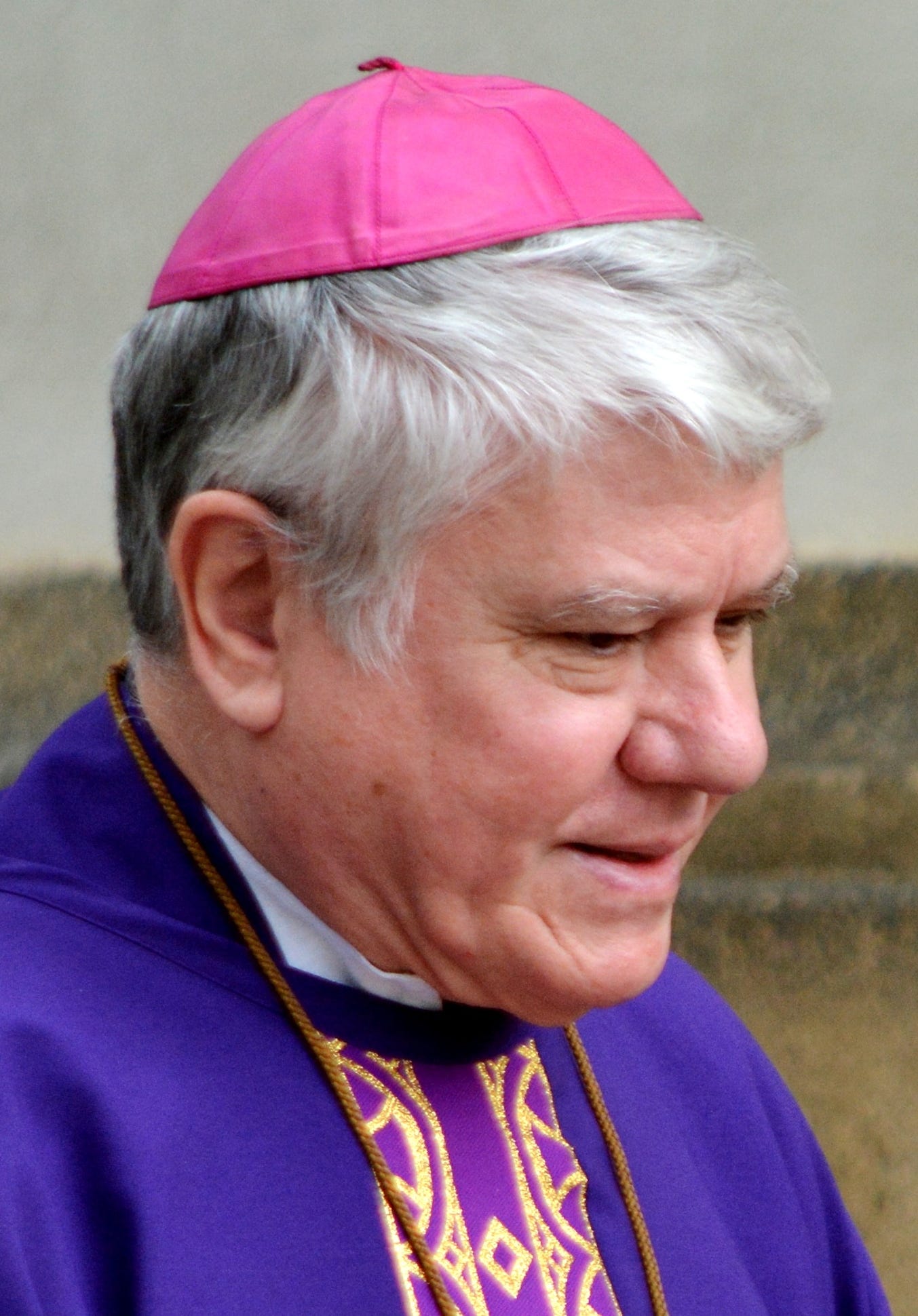
A signatory of Charter 77 as a young priest and for a time one of its public spokesmen, he accepted unhesitatingly that his participation in the dissident movement would change his life for a time or forever. He was soon banned as a priest, imprisoned for seven months, and assigned by the communist regime to stoke furnaces in the hotels of Prague. Like Msgr. Tomáš Halík in the same period, Havel’s friend and a remarkable writer, he continued his priestly calling clandestinely. Thank goodness, times change. During the Velvet Revolution he memorably led a mass gathering in Prague in the Lord’s Prayer, which many scarcely knew after decades of religious repression. In 1997 he was consecrated a bishop by John Paul II, he enjoyed a warm relation with President Havel, and very naturally figured among the speakers at Havel’s funeral. Bishop Malý knew his man. In a retrospective interview some years later, he reflected about Havel’s spirituality:
He was always directed towards God, but he was hesitant to name that faith. He often talked about transcendence, a vanishing point, a transcendent moral authority and so his direction was clear, but he was very shy, and he did not want to explicitly state it. . . . Of course, he valued Christianity, but he never truly took its teachings to heart, he had more of a spiritual perspective. I never forced it on him. When we met, he always asked me to make the sign of the cross on his forehead as a goodbye.
That rings true, doesn’t it? Ancient, good custom matters—what a fine way to take leave. And as if to endorse and demonstrate what the bishop perceived in his friend, why not listen to a last passage from the prison letters, to which we can assign the closing word.
The world of an “I” that is oriented toward Being is different from the world of an “I” that has succumbed to its existence-in-the-world. Nothing in the former world is entirely defined by its function; everything, in a way that is unclear, somehow transcends both its function and itself as well; everything in it seems turned toward Being, its harmony, its infinitude, its totality and its mystery. . . .; everything . . . mirrors its humble wonder—and terror—at the sovereignty of Being, its longing for Being’s touch and its irrepressible hope. (10 July 1982)
Sources for this Substack include Havel’s Letters to Olga; three addresses (Philadelphia, Havard, Dublin) published in Havel’s The Art of the Impossible: Politics as Morality in Practice; and an interview with Bishop Malý by Martina Heroldová, published in Aktuálně.cz, 15 December 2021. The translation is by my research partner, Barbora Novotná.